

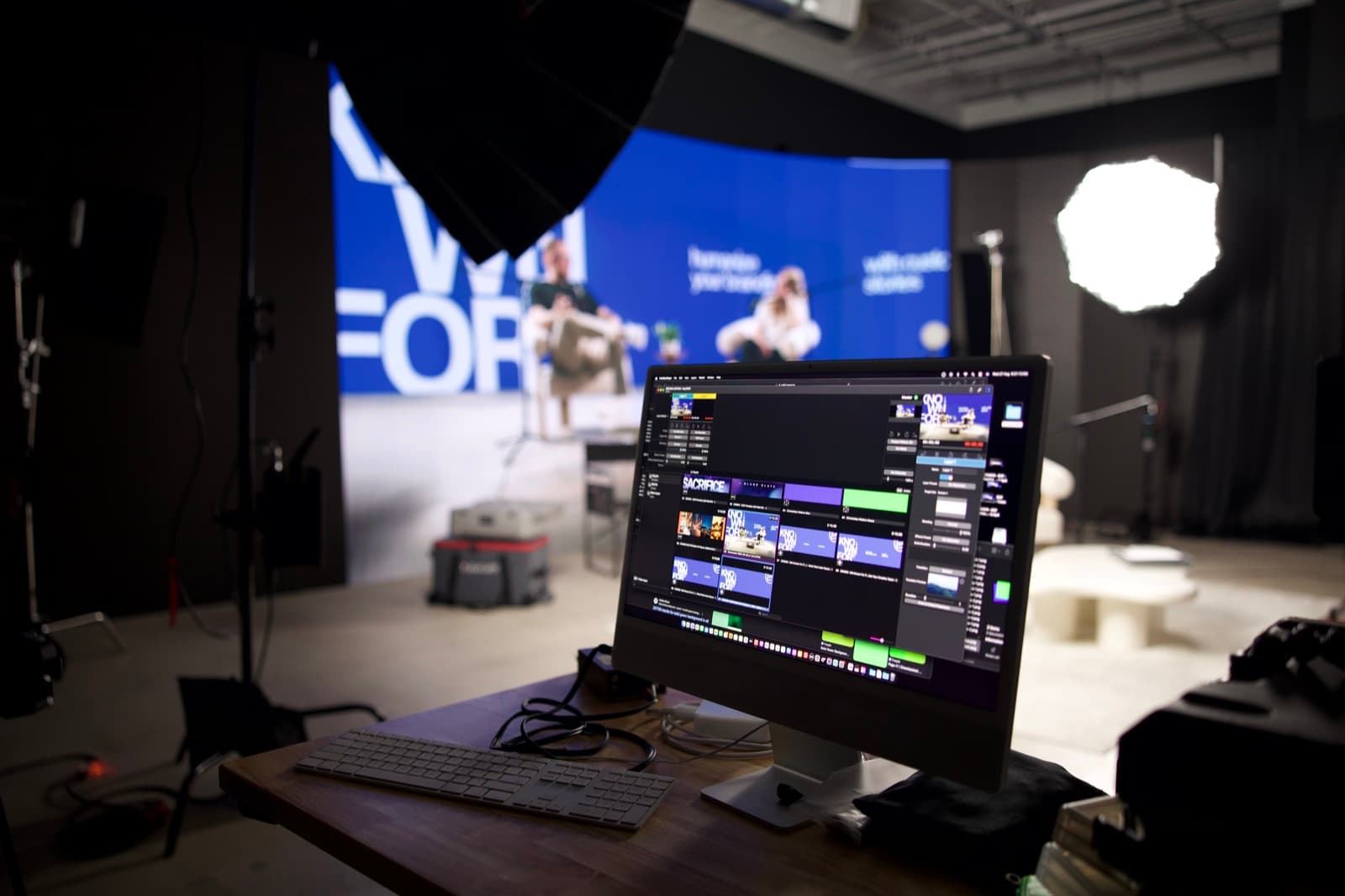
The edit starts before the doors open.
By the time an editor sits down, the team should already know the deliverable, length, audience, visual style, music direction, sponsor requirements, graphics package, deadline, and who can approve it.
Without that preparation, a fast edit becomes a room full of skilled people waiting on decisions.
First, define what “same day” means
Same day can describe very different assignments.
A fast social clip
One short vertical piece built around a speaker line, audience reaction, sponsor moment, or event announcement.
A show moment
A polished 30-to-90-second piece that plays later in the program, opens the next day, or posts before the audience leaves.
A daily recap
A one-to-three-minute story covering the day's energy, major moments, speakers, attendees, and brand.
An event newsroom
Several editors deliver clips, interviews, sponsor pieces, social posts, speaker content, and daily recaps throughout a conference.
These are different staffing models.
A request for “a few quick edits” can turn into a newsroom when the deliverable list is not written down.
The main budget drivers
Dedicated editors
An editor working during the event is not available to shoot, manage a room, or wait until the footage arrives that night.
The number of editors depends on:
- number of deliverables
- deadlines
- length and complexity
- graphics
- captions
- number of platforms
- how much footage each editor must review
One editor can focus deeply on one priority. Several simultaneous pieces may need several editors or a lead editor with support.
Media management
Someone needs to collect cards, copy footage, verify backups, label files, and get the right material to the right editor.
This role is easy to overlook because the final audience never sees it. It is also the part that keeps footage from disappearing into a pile of folders while the clock runs.
On a larger event, media may arrive from several camera teams, stage feeds, audio recorders, drones, photographers, and phones. The handoff needs a system.
On-site edit equipment
The edit team may need:
- fast computers
- calibrated monitors
- headphones or speakers
- card readers
- high-speed storage
- Network storage for multiple editors
- backup drives
- power and battery protection
- networking
- upload bandwidth
- tables, chairs, and a secure room
A laptop in the back of a ballroom can handle some work. A prepared edit station gives the team reliable power, fast storage, and room to think.
Pre-built graphics and music
Same-day work moves faster when the team already has:
- approved open and close
- lower thirds
- sponsor cards
- logo files
- fonts
- color styles
- caption treatment
- music options
- platform specifications
Custom animation built from scratch during the event consumes time that could be spent improving the story.
A producer or content lead
Someone needs to decide what matters.
That person may:
- watch the run of show
- flag key moments
- coordinate camera priorities
- select interviews
- connect sponsor requirements
- keep the edit aligned with the event message
- manage client review
The editor should not have to discover the entire content strategy while scrubbing through six hours of footage.
Approval speed
Fast delivery needs fast decisions.
Name one person who can approve the piece. Decide whether they are reviewing:
- story only
- graphics and sponsor placement
- factual claims
- final export
Set a response window. A 20-minute approval delay can matter when the video plays in 30 minutes.
Build the budget from the deliverable backward
For each same-day piece, write:
- purpose
- audience
- length
- platform or screen
- deadline
- footage sources
- required people or sponsors
- graphics
- captions
- music
- review owner
- publication owner
Then ask the production team to show the staffing and workflow required.
A short deliverable is not always a quick deliverable. A 20-second sponsor piece may require footage from three activations, an interview, logo approval, captions, and a legal line.
Three staffing models
Model 1: One priority edit
Best for one clear deliverable with a realistic capture window.
A basic team may include:
- camera coverage planned for the piece
- one media handoff owner
- one editor
- one client approver
This works when the edit has a template, the story is simple, and the editor receives useful footage early.
Model 2: Small fast-turn pod
Best for a daily recap plus a few social clips.
The operation may include:
- dedicated capture priorities
- media manager or assistant editor
- one lead editor
- one additional editor or motion support
- producer or content lead
- client approval owner
The team can divide work and protect the main recap while smaller pieces move in parallel.
Model 3: Event newsroom
Best for conferences with several stages, sponsors, interviews, and publishing deadlines.
The operation may include:
- camera teams assigned by content goal
- field producers or interviewers
- media management
- several editors
- motion graphics support
- post lead
- content producer
- client and sponsor approval path
- upload or social publishing support
This model costs more because it is a live content department, not an edit added to the end of coverage.
A sample same-day workflow
Imagine a 60-second recap that needs to play at 6:00 p.m.
Before the event
- treatment and reference approved
- music and graphics prepared
- must-have moments listed
- stage and sponsor requirements confirmed
- approver and deadline confirmed
9:00 a.m. to noon
- opening, arrival, crowd, details, and first interviews captured
- media delivered in planned batches
- editor builds the opening and selects
Noon to 3:00 p.m.
- key sessions and sponsor moments arrive
- producer flags the strongest quotes
- editor builds the middle and begins sound and graphics
3:00 to 4:30 p.m.
- final required footage delivered
- editor completes story
- captions, graphics, and sponsor cards added
4:30 to 5:00 p.m.
- client review
- one consolidated set of notes
5:00 to 5:30 p.m.
- final changes
- export and quality check
5:30 p.m.
- playback or upload test
The exact clock will change. The principle does not: footage has to reach the editor before the final hour.
What makes same-day editing more expensive
- more simultaneous rooms
- more deliverables
- more cameras and footage
- longer pieces
- custom graphics
- heavy sponsor obligations
- several approval groups
- late access to stage feeds or audio
- weak internet
- no secure edit space
- late-night or overnight delivery
- travel and equipment shipping
- last-minute changes to the run of show
The biggest cost driver is often uncertainty. Teams add people and contingency when the plan depends on footage, approvals, or systems that are still unclear.
How to control the budget
Choose one hero priority
Protect the piece that matters most. Add secondary clips only after its coverage and workflow are secure.
Build templates in advance
Approve graphics, captions, music, sponsor cards, and end slates before the event.
Deliver media in waves
Do not wait until the final session ends. Send cards or transferred files throughout the day.
Give cameras specific assignments
One operator may focus on cinematic B-roll. Another may capture interviews. Another may cover sponsors or stage moments. Clear roles reduce duplicate footage and missing story pieces.
Limit the approval group
One empowered reviewer saves time and reduces contradictory notes.
Be honest about the deadline
A clip due at 2:00 p.m. needs its final required moment well before 2:00 p.m. Put capture cutoffs into the run of show.
Separate must-haves from nice-to-haves
The editor should know which elements can disappear if time gets tight.
Questions to ask in the proposal
- How many editors are dedicated to the event?
- Who manages and backs up media?
- Where will editing happen?
- What equipment and internet are required?
- Which graphics and music are prepared in advance?
- When must each piece receive its final footage?
- Who selects story moments?
- Who can approve the edit?
- How many review passes are possible before delivery?
- Who publishes or plays the file?
- What happens when a required moment runs late?
- Is overnight or next-morning work a separate scope?
What this means for your event budget
Same-day editing is possible because people, equipment, and decisions are ready before the footage arrives.
Treat it as its own operation. Define the deliverables. Staff the media path. Prepare the graphics. Protect the edit room. Give one person approval authority.
The result will feel fast to the audience because the planning started early.