


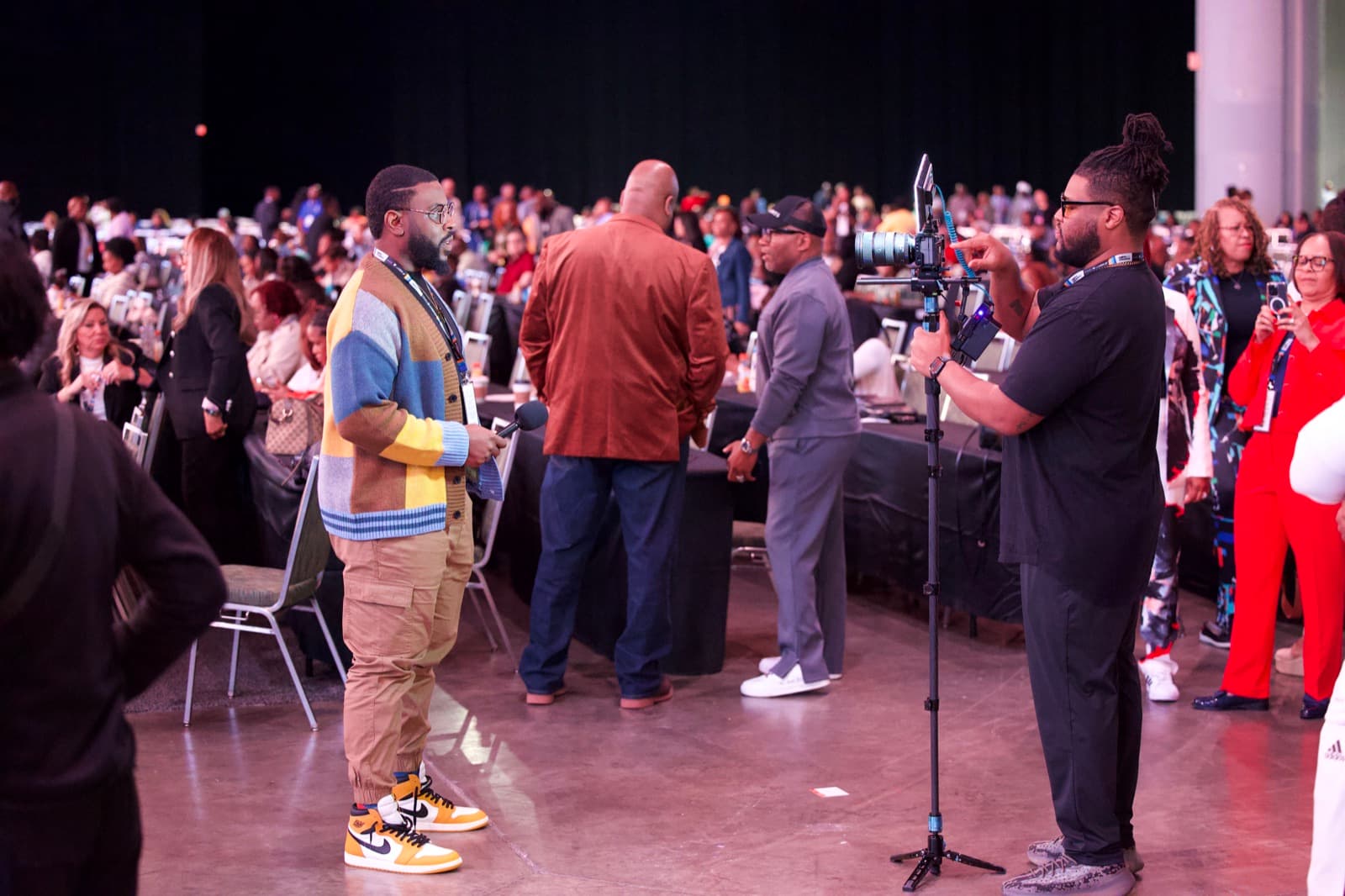
I love a good recap. It can make people smile, remember the room, and wish they had been there.
A strategy gives the whole production a longer life.
Think about the last hour of a conference. The hallway is full of half-packed booths. Someone is peeling vinyl off a wall. Your team is running on coffee and adrenaline. Meanwhile, the camera cards are holding dozens of stories: a sponsor explaining why they came, an attendee describing the moment that changed their mind, a speaker laughing backstage, a leader saying what the event means for next year.
If nobody decided what those stories were for, most of them will sit on a drive.
That is the difference.
Start with the next decision you want someone to make
Before the shot list, ask a more useful question:
What should happen because this content exists?
That is the question I keep coming back to when we plan event coverage.
Maybe you need to:
- sell tickets for next year
- prove value to sponsors
- help speakers promote their sessions
- give attendees something worth sharing
- show donors where the money went
- recruit volunteers or employees
- turn expert sessions into useful educational content
- give the sales team fresh proof after the event
Each goal changes what the crew should capture.
A ticket-sales story needs anticipation, belonging, and a clear reason to return. Sponsor content needs visible participation and proof that the audience paid attention. A leadership piece needs thoughtful answers and clean sound. A social clip may need one sharp sentence before the room has even emptied.
The camera team can only prioritize those moments when the purpose is clear.
A recap and a strategy can use the same footage
This is where teams sometimes overcomplicate the decision. You do not have to choose between a beautiful recap and useful campaign content.
You can plan for both.
The same attendee interview might become:
- one emotional line in the recap
- a 30-second testimonial for next year's registration page
- a quote card for social
- a longer story for an email campaign
- a sponsor-facing example of audience impact
The same keynote footage might become:
- a dramatic opening moment in the recap
- three educational clips
- a speaker promo
- a paid ad
- a training excerpt for members
The footage is shared. The edit, framing, and timing give each piece its own job.
Plan for three clocks
Event content usually moves on three timelines.
1. While the event is still happening
This is the fast lane.
It may include:
- short vertical clips
- speaker quotes
- sponsor moments
- quick attendee reactions
- a morning or day-one recap
- screens or lobby content
- media clips for partners
These pieces work because the energy is current. People are checking the hashtag, texting coworkers, and deciding whether to attend tomorrow.
Fast delivery requires a real workflow. Someone needs to move media, organize selects, edit, route approvals, export, and hand off the final file. The event is still running while all of that happens.
2. In the days after the event
This is when attention is still warm.
Useful pieces include:
- the main recap
- speaker highlights
- attendee stories
- sponsor thank-you content
- session cutdowns
- a leadership message
- an email follow-up video
This window is often underused. The audience still remembers the conversations, the people, and the feeling of being there. A good post-event plan keeps that momentum moving.
3. Over the next several months
This is the library.
Content from the event can support:
- registration for the next event
- year-round social posts
- sales conversations
- donor or board updates
- sponsor outreach
- recruiting
- training
- a future brand film
Long-tail content only works when the footage is labeled, backed up, and easy to find. A pile of camera folders is technically an archive. It is rarely a useful one.
Give every important audience a place in the plan
Most events serve more than one group. The content should reflect that.
Attendees
Capture why they came, what surprised them, and what they plan to do next. Specific answers carry more weight than generic praise.
Instead of asking, “Are you enjoying the conference?” try:
- What is one idea you are taking back to your team?
- Who did you meet today that you would not have met anywhere else?
- What changed for you in that session?
- What would you tell someone considering next year?
Speakers
Get clean excerpts from the stage, then make room for a quick offstage thought. The useful quote is often the sentence they say after the formal presentation is over.
Sponsors and partners
Film their presence with intention. Capture interaction, signage in context, product use, and a short explanation of why the audience matters to them. A logo in the background is less persuasive than visible participation.
Leadership
Leaders can give the event a larger meaning. Ask what the organization heard, what it learned, and where it is going next. Schedule this interview while the message is still fresh and before everyone scatters.
Staff and volunteers
Behind-the-scenes moments show care, scale, and personality. They also give future team members a more honest picture of the culture around the event.
Build an asset map before you build a shot list
A shot list tells the crew what to film. An asset map tells everyone why it matters.
A simple version might look like this:
| Audience | Desired action | Content needed | Delivery timing |
|---|---|---|---|
| Prospective attendees | Register next year | Recap, attendee stories, speaker clips | Next week through launch |
| Sponsors | Renew or inquire | Sponsor feature, audience proof, event scale | During event and follow-up |
| Current attendees | Share and stay engaged | Fast social clips, daily recap, thank-you | Same day and next morning |
| Leadership or board | Understand impact | Results film, leadership message, testimonials | Within two weeks |
| Sales or development team | Continue conversations | Short proof clips, customer stories, photos | Organized library after event |
This document becomes the bridge between marketing, production, and post.
It also helps the team make decisions when time gets tight. If two moments happen at once, the crew knows which audience and deliverable carries more weight.
The workflow matters as much as the camera count
A large camera team can still miss the deadline when nobody owns media and approvals.
For fast-turn work, decide:
- where cards are delivered
- who copies and verifies the footage
- how files are named
- which editor owns each deliverable
- whether graphics and music are approved in advance
- who can approve an edit
- how quickly that person will respond
- where final files are sent
- who publishes them
One person should have final authority for notes. Ten separate text threads can burn an hour that the edit does not have.
Templates help too. Pre-approved lower thirds, sponsor cards, end slates, fonts, music options, and caption styles give the editor room to move quickly without guessing at the brand.
When a simple recap is enough
Some events only need one strong film.
A recap may be the right scope when:
- the event is private or internal
- there is no active campaign after the event
- the footage has one clear audience
- the budget is intentionally focused on one polished deliverable
- the event is small enough that extra coverage would not create meaningful value
That is a perfectly good decision when it is made on purpose.
The trouble starts when a team expects one recap to handle ticket sales, sponsor reporting, social media, fundraising, speaker promotion, recruiting, and internal communications all at once.
One video can carry a lot. It cannot carry every message equally well.
A practical event content brief
Before the production call, answer these questions:
- What is the event trying to change for the people in the room?
- Who needs to see the content afterward?
- What should each audience think, feel, or do?
- Which assets are needed during the event?
- Which assets are needed in the first seven days?
- What should remain useful six months from now?
- Which speakers, attendees, sponsors, or leaders must be captured?
- Who can approve fast-turn edits?
- Where will the content be published?
- How will footage and final files be organized for future use?
You do not need every answer to be perfect. You need enough clarity for the production team to build the right system around the event.
What this means for your event
The strongest event content starts before the doors open.
Decide what the audience should do next. Map the deliverables to that decision. Then build the crew, interviews, media workflow, and edit schedule around the plan.
You can still make the beautiful recap.
You will also leave with content that helps the event keep doing its job long after the lights come down.